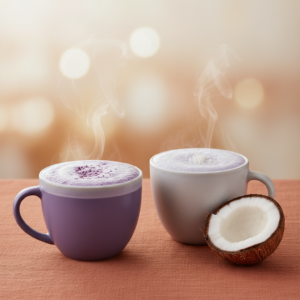
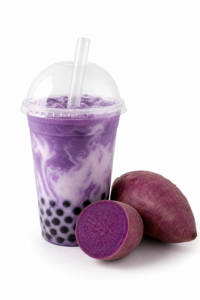
First and foremost, the’violet ube It can be enjoyed as a hot or iced latte, sprinkled into cottage cheese, and it's already a beautiful daily ritual, simple and pure.
In addition to this use, ube can be used in recipes that will surprise your guests, loved ones or customers.
Indeed, far more than just a passing trend, ube is a high-quality culinary ingredient, as versatile as cocoa, carob, coffee, almond paste…
These desserts are traditional and popular in the Philippines, which contrasts sharply with the current, highly Instagrammable image of this tuber in the West. They are true institutions, found everywhere: in homes, markets, restaurants, and at celebrations. Their popularity has never waned!
The purple ube is widely cultivated in the Philippines and its sweet flavor allows it to be incorporated into many desserts.
Today, we are going to present one of its flagship recipes: ube halaya.
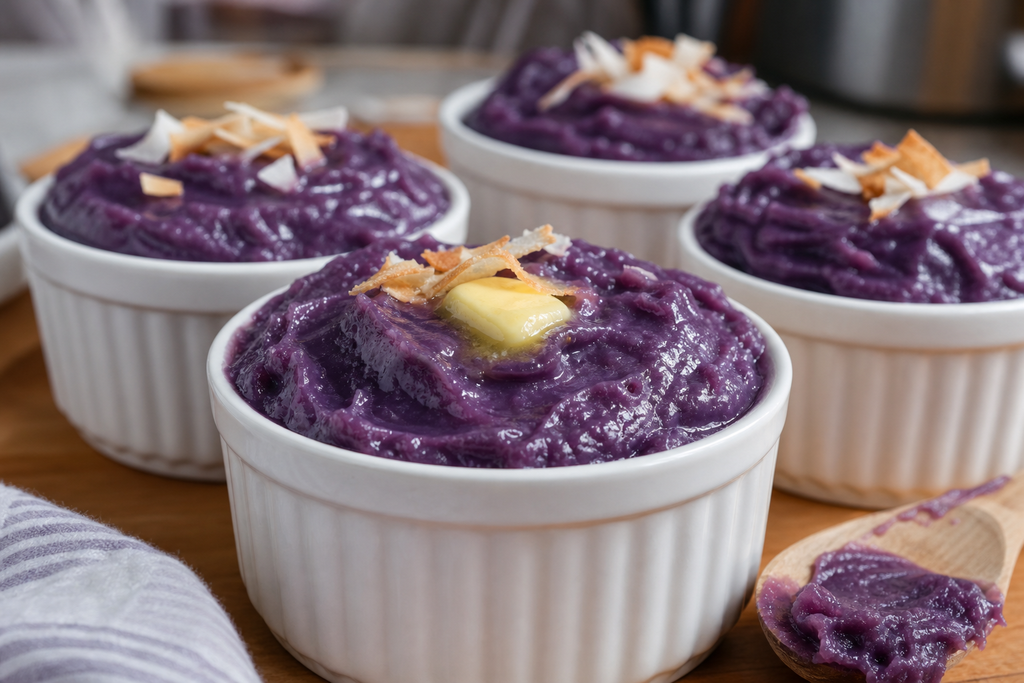
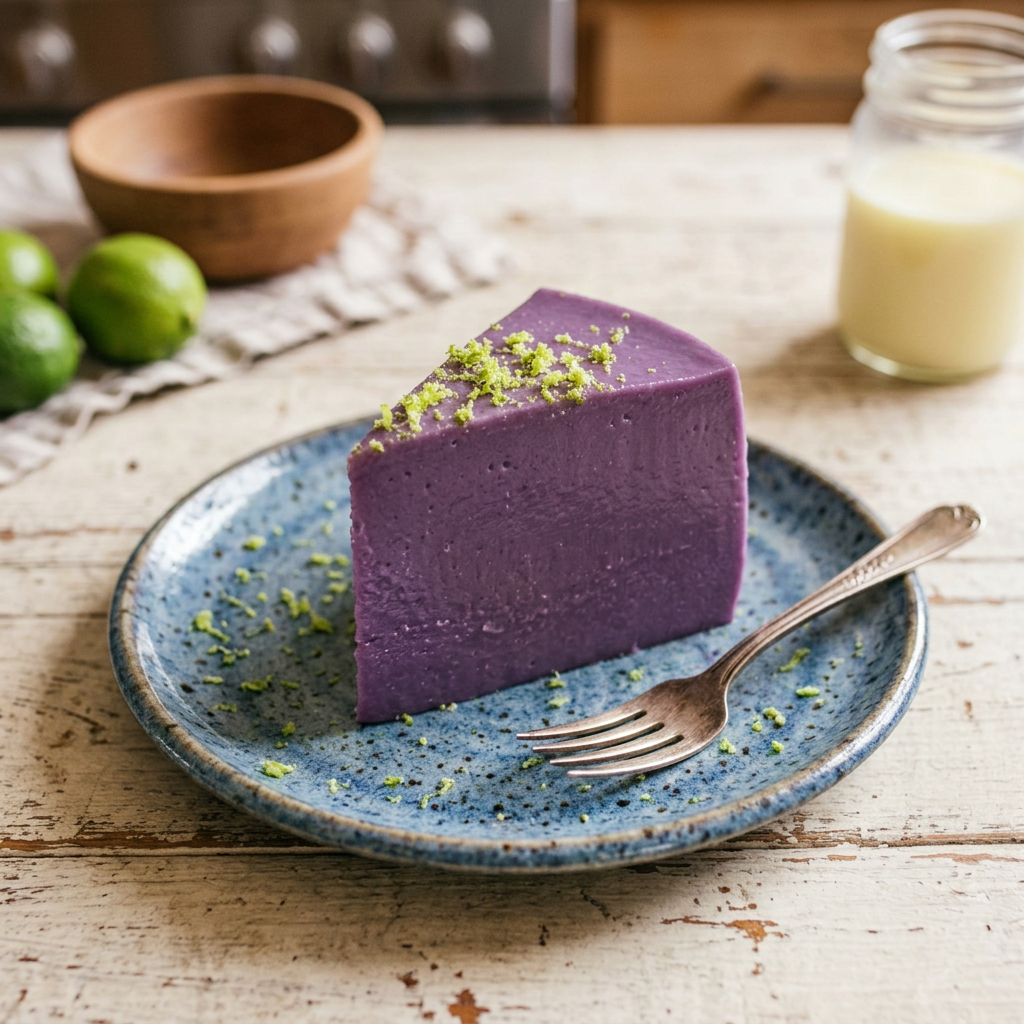
We could describe it as spread, or jam, This smooth and appetizing spread, made by blending ube with condensed milk, coconut milk, and butter, has the added bonus of ube's beautiful purple color. It can be enjoyed on its own or used as an ingredient in other desserts (for example, halo-halo).
| Stage | Duration |
|---|---|
| Preparation | 5 min |
| Cooking (medium heat) | 20-25 min |
| Cooling | 2 hours (fridge) |
| Total | 2 hours 30 minutes |
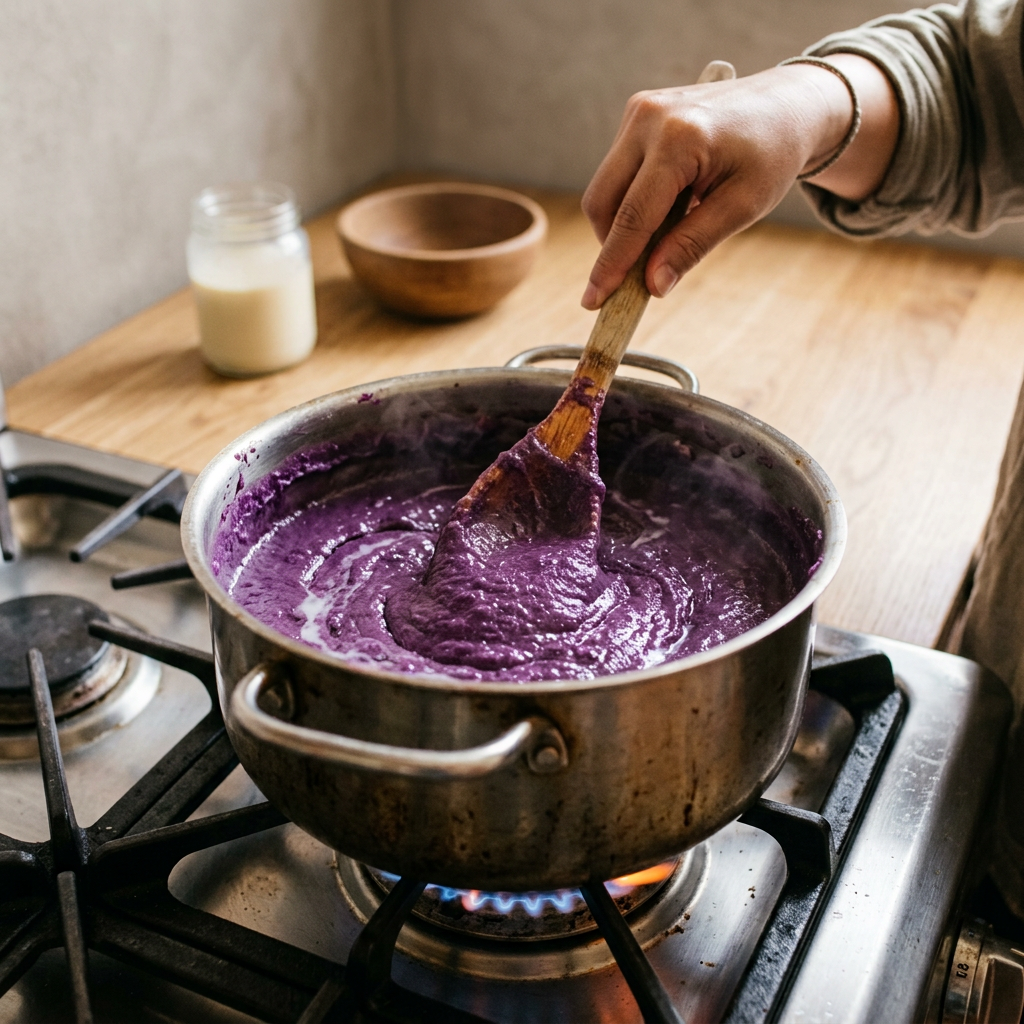
In a medium saucepan (with a thick base to prevent sticking), melt 30 grams of unsalted butter and pour in the ingredients, preferably previously mixed in a blender:
Heat over medium heat by stirring constantly with a wooden spatula to avoid lumps.
If the mixture becomes too thick too quickly, add 1 to 2 tablespoons of water or coconut milk. The mixture should thicken gradually.
Texture test of your halaya:
Pour into a dish, mold or individual cups and let cool at room temperature before putting it in the fridge for a minimum of 2 hours.
Conservation :
In the fridge In an airtight container, 1 week.
Freezing : Up to 3 months (defrost in the fridge before serving).
Once cooled, you get a beautiful, shiny, creamy and slightly sticky texture.
You can then shape this dough as desired.
Your ube jam can be enjoyed straight from the ramekin, or in slices, topped with coconut milk, lime zest, fruit, grated coconut…
Another way to enjoy it is on toast, pancakes, as a cake frosting, or in a ball for your first homemade halo-halo (recipe coming soon!)
Halaya is very versatile!
Enjoy your food.
Advice
 Do not cook at too high a temperature (the texture becomes grainy)
Do not opt for an industrial powder at the ube, which contains sugar, colorings, or additives. Choose a natural and pure powdered ube like ours. Use the code HALAYA5 in our online store to get 5% off on our ube!
Not stirring enough The halaya can stick and become grainy.
Too much sugar The ube already has a natural sweetness. Taste it before adding anything else!
Skip the cooling step The texture will not be optimal.
 Mix the ingredients blend them before cooking